Deborah De Felice1
Giuseppe Giura2
Vicente Riccio3
16 de março de 2026
***
Este escrito compõe uma Série Especial do Boletim Lua Nova, em conjunto com pesquisadores e pesquisadoras vinculados à rede internacional Justice in the XXI Century: A Perspective from Latin America (JUSTLA). O projeto, coordenado pela Universidade de Catania (Itália) e financiado pela União Europeia no âmbito da ação HORIZON–Marie Skłodowska-Curie Staff Exchanges, reúne 148 integrantes de 18 instituições da América Latina e da União Europeia.
Os escritos são um convite a atravessar diferentes territórios do conhecimento para (re)pensar a justiça no século XXI. Ao longo da série, o JUSTLA promove um diálogo entre pesquisas desenvolvidas em diferentes contextos e abordagens, de modo que o leitor e a leitora poderão acompanhar um movimento no qual ideias, contextos e práticas se entrelaçam para reinventar, no presente, o sentido da justiça. Os textos do Especial podem ser conferidos aqui.
***
* This synthetic paper is one of the results of the “Judicial Responses to Environmental Crimes in Amazonas: the case of Apuí and Lábrea Municipalities”, financially supported by Gerda Henkel Stiftung (Germany) and Conselho Nacional de Desenvolvimento Científico e Tecnológico (CNPq).
The Amazon rainforest is often described as the “lung of the world.” The phrase circulates widely in media headlines, political speeches, and international summits, evoking an image of a vast green sanctuary quietly sustaining life across the planet. Yet this familiar metaphor risks obscuring a far more complex reality. Behind the global concern for biodiversity and carbon emissions lies a territory shaped by poverty, fragile institutions, informal economies, and expanding criminal networks. Climate change, in this context, is not only an environmental crisis. It is also a social, legal, and political one.
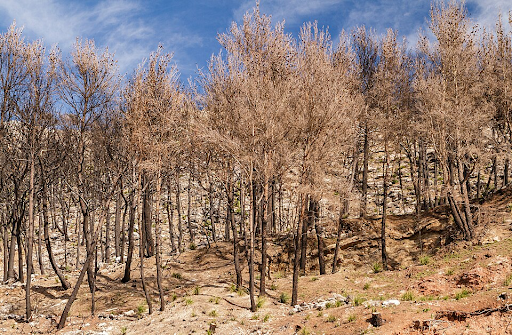
In southern Amazonas, Brazil, climate justice unfolds far from conference rooms and diplomatic declarations. It takes shape in remote municipalities where deforestation advances along dusty highways, where land is bought and sold through informal agreements, and where overstretched public officials attempt to enforce environmental law across territories larger than many European countries. This is the setting of an ongoing socio-legal research project focusing on two municipalities, Apuí and Lábrea, both among the most severely affected by illegal logging and forest fires in the Brazilian Amazon.
The project explores how environmental crimes are committed, how institutions respond, and how judges, prosecutors, police officers, and environmental agents perceive their daily struggle to protect one of the planet’s most vital ecosystems. By bringing together satellite data, legal analysis, and qualitative interviews, the research aims to shed light on a crucial yet often overlooked dimension of climate justice: what happens when ambitious environmental laws meet weak state capacity on the ground.
The Amazon between law and reality
Brazil’s Federal Constitution of 1988 formally recognizes environmental protection as a fundamental right and guarantees the preservation of biodiversity and the rights of traditional peoples. On paper, the Amazon enjoys robust legal safeguards. In practice, however, these protections collide with persistent structural problems. Southern Amazonas is marked by low levels of economic development, widespread poverty, limited infrastructure, and a chronic shortage of public personnel. These conditions are compounded by the immense size of the territory and the difficulty of accessing many areas, which can require hours or even days of travel by road, river, or air.
Environmental degradation in this region cannot be understood as the result of isolated illegal acts. Instead, it is embedded in a broader landscape of informal land markets, weak property registration, and expanding organized crime. Illegal logging, fires, land grabbing, and mining require capital, logistics, and coordination. Such activities are rarely carried out by individuals acting alone. They are typically supported by networks capable of financing heavy machinery, bribing officials, and controlling territory.
This reality challenges conventional approaches to environmental protection that focus primarily on regulation and monitoring. Satellite imagery has dramatically improved the detection of deforestation and fires, and Brazil’s PRODES system has been tracking forest loss since the late 1980s. These technologies provide precise data on where trees are being cut and land is being cleared. Yet identifying environmental damage is only the first step. Transforming this information into effective law enforcement requires institutions that can investigate crimes, gather evidence, arrest suspects, and bring cases to court. In southern Amazonas, these capacities remain severely limited.
The research adopts a socio-legal perspective that treats the rule of law not as an abstract principle but as something that must be enacted daily through concrete practices. State capacity, in this view, depends not only on formal institutions but also on social acceptance, cultural norms, and material resources. Environmental law enforcement is shaped by geography, local power structures, and historical patterns of land occupation. Understanding climate justice in the Amazon therefore requires attention to these interconnected dimensions.
A frontier under pressure
Apuí and Lábrea lie in what is often called the “arc of deforestation,” a vast zone stretching across several Brazilian states where agricultural expansion and extractive activities have driven rapid forest loss. Both municipalities are connected to the Trans-Amazonian Highway, a massive infrastructure project launched in the 1970s that opened large areas of rainforest to settlement and commercial exploitation. Over time, waves of migrants arrived in search of land and opportunity, bringing with them a frontier mentality that continues to shape local practices.
Today, Apuí covers more than 54,000 square kilometers and has a sparse population largely dependent on agriculture and federal transfers. Lábrea is even larger, extending over roughly 68,000 square kilometers, with an economy dominated by extractive activities and cattle raising. Social indicators in both municipalities fall below state averages, reflecting high inequality and limited access to services. Land conflicts are common, and violent disputes over property are part of everyday life.
In these settings, land is frequently traded without formal titles. People acquire plots through informal agreements that confer possession but not legal ownership. This system benefits speculators and “grileiros,” who occupy public land, clear forest to demonstrate “productive use,” and later attempt to legalize their claims. Judges and prosecutors interviewed for the study describe a chaotic landscape of overlapping certificates and contradictory records, where multiple actors may assert rights over the same area.
This legal uncertainty fuels deforestation. Clearing forest becomes a strategy for asserting control over land, especially where property rights are poorly defined. At the same time, local political dynamics often reinforce these practices. Influential figures provide assistance to impoverished residents, offering food, transport, or medical help in exchange for loyalty. Their environmental crimes are frequently overlooked or even socially legitimized because they fill gaps left by the state.
Such dynamics reveal how deeply environmental harm is intertwined with social inequality. For many residents, survival depends on participating in or tolerating illegal activities. Climate justice, in this context, cannot be separated from questions of development, governance, and social protection.
Listening to the institutions
To better understand how environmental laws are implemented in this challenging environment, the research team conducted semi-structured interviews with a wide range of institutional actors between 2021 and 2023. Participants included federal and state judges, prosecutors, federal and military police officers, environmental agents, firefighters, notaries, and local politicians based in Manaus, Lábrea, and Porto Velho. All had direct experience dealing with environmental crimes in southern Amazonas.
These conversations paint a vivid picture of institutional fragility. In Lábrea, for example, the military police force consists of only about thirty officers responsible for patrolling an area comparable in size to entire countries. Some of the regions most affected by deforestation lie more than a thousand kilometers from the municipal center. Even elected officials rarely visit these zones, and mayors typically travel there only once or twice a year.
Federal police investigations face similar constraints. Because of logistical considerations, crimes committed in parts of Amazonas are sometimes handled by units based in neighboring states, several hours away by road. Environmental agencies struggle with chronic shortages of staff, vehicles, fuel, and equipment. Inspectors can identify illegal activity through satellite images but often lack helicopters or boats to reach the sites. Operations require special authorization and funding, meaning that many alerts never lead to on-the-ground action.
The difficulties do not end once cases enter the legal system. Producing forensic evidence for environmental crimes is notoriously challenging. By the time investigators arrive, the landscape may have changed, machinery may be gone, and witnesses may be unwilling to testify. Judges explain that environmental offenses rarely meet the legal criteria for preventive detention, allowing suspects to remain free while proceedings drag on. Meanwhile, the individuals financing large-scale deforestation often remain invisible, shielded by intermediaries and complex ownership structures.
Institutional actors also face personal risks. Several interviewees spoke of threats and intimidation linked to their work. In regions where criminal organizations wield significant economic and political influence, enforcing environmental law can be dangerous. This climate of fear further undermines the already fragile capacity of the state.
Organized crime and environmental destruction
One of the most striking insights emerging from the research is the extent to which environmental crime is entangled with organized criminal networks. Illegal logging, mining, and land grabbing require heavy equipment, transport infrastructure, and access to markets. These operations demand substantial investment and carry significant risk, making them unattractive to small-scale actors. Instead, they tend to be managed by groups capable of mobilizing capital, laundering profits, and corrupting officials.
In the Amazon, these networks overlap with drug trafficking routes connecting Brazil to Colombia and Peru. As organized crime expands into new territories, it brings with it rising levels of violence. Homicide rates in Amazonas have increased sharply over the past decade, surpassing national averages. Environmental exploitation and violent crime are two sides of the same coin, driven by the same structures of power and profit.
This convergence has profound implications for climate justice. Efforts to curb deforestation cannot succeed without addressing the criminal economies that sustain it. Yet environmental policy is often treated as separate from debates about public security, corruption, and social inequality. The research suggests that such compartmentalization is deeply misleading. Protecting the forest requires confronting organized crime, strengthening institutions, and rebuilding trust between the state and local communities.
Technology meets territory
Satellite monitoring has transformed our understanding of deforestation in the Amazon. PRODES data show dramatic fluctuations in forest loss over the past three decades, with peaks in the early 2000s, a decline in the following years, and renewed increases after 2018. Recent figures suggest a partial slowdown, but the overall picture remains alarming: hundreds of thousands of square kilometers have been cleared since systematic measurement began.
These numbers play a crucial role in shaping national policies and international perceptions. They inform climate commitments, supply-chain agreements, and funding mechanisms such as the Amazon Fund. Yet for those working on the ground, satellite images are only a starting point. Turning pixels into prosecutions requires vehicles, fuel, personnel, and time—resources that are in chronically short supply.
Interviewees repeatedly emphasized this gap between technological capability and institutional reality. Environmental agents can see deforestation happening in real time but cannot always reach the affected areas. Police officers know where illegal activities are concentrated but lack the logistical support to intervene. Prosecutors receive reports of large-scale forest clearing but must prioritize only a handful of cases due to budgetary constraints.
This disconnect highlights a broader tension at the heart of climate governance. Global systems of monitoring and accountability are advancing rapidly, while local enforcement capacities lag behind. The result is a form of symbolic governance, where environmental harm is meticulously documented but only partially addressed.
Climate justice from the margins: what has been achieved, and what lies ahead
What emerges from this research is a portrait of climate injustice rooted in everyday inequalities. The environmental costs of deforestation are global, contributing to biodiversity loss and greenhouse gas emissions that affect the entire planet. Yet the burden of enforcement falls on under-resourced institutions and vulnerable communities in remote regions. Southern Amazonas illustrates how climate change is experienced unevenly, shaped by historical patterns of exclusion and neglect.
For residents of Apuí and Lábrea, environmental protection competes with immediate needs for income, land, and security. For public officials, enforcing the law means navigating vast territories with minimal support, often in the face of powerful interests. These realities challenge simplistic narratives that frame deforestation solely as a matter of political will or regulatory design.
Climate justice, in this sense, demands more than ambitious targets and international pledges. It requires sustained investment in local institutions, transparent land governance, and social policies that reduce dependence on illegal economies. It also calls for integrating environmental protection with broader strategies to combat organized crime and corruption.
At this stage, the project has produced a detailed qualitative map of environmental law enforcement in southern Amazonas. It has documented the structural obstacles faced by criminal justice institutions, from geography and logistics to land tenure and organized crime. It has illuminated how cultural practices and informal power relations shape the implementation of environmental norms. And it has developed an analytical framework that connects deforestation to state fragility and illegal economies.
The next phase of the research will deepen this analysis through a systematic review of judicial decisions related to environmental crimes in Apuí and Lábrea. By combining qualitative insights with quantitative data, the project aims to identify patterns in prosecution, conviction, and sentencing, offering a clearer picture of how environmental law operates in practice. Further interviews with civil society actors and community leaders are also planned, in order to incorporate perspectives beyond formal institutions.
Ultimately, the goal is not only to describe a problem but to contribute to a broader conversation about climate justice in the Global South. The Amazon is often imagined as a pristine wilderness in need of protection. This research insists on a more grounded perspective, one that recognizes the forest as a lived space shaped by inequality, conflict, and resilience.
Safeguarding the Amazon, it suggests, is inseparable from strengthening democracy, rebuilding state capacity, and addressing the social roots of environmental crime. Without these foundations, satellite data and international agreements risk remaining distant abstractions, disconnected from the realities faced by those living and working at the forest’s edge. By listening to judges, police officers, prosecutors, environmental agents and indigenous people, this project brings into focus the human dimension of climate governance. Their experiences remind us that climate justice is not only negotiated in global forums. It is fought for every day, in remote towns and along unpaved roads, where the future of the forest is decided case by case.
* Funded by the European Union. Views and opinions expressed are, however, those of the author(s) only and do not necessarily reflect those of the European Union or HORIZON-MSCA-2023-Staff Exchanges JUSTLA – Justice in the XXI Century: A Perspective from Latin America, Grant Agreement: 101183054. Neither the European Union nor the granting authority can be held responsible for them.
** Este texto não reflete necessariamente as opiniões do Boletim Lua Nova ou do CEDEC. Gosta do nosso trabalho? Apoie o Boletim Lua Nova!
Crédito da imagem: imagem enviada pela autora.